 Digital Trasformation at your finger tips



Top Stories
More From Our Blogs

Understanding ServiceNow CSDM5: Key Changes and Updates
The release of ServiceNow’s CSDM5 (Common Service Data Model 5) has raised many questions for organizations trying to keep up with the evolving landscape of service management. With its new features and structural updates, CSDM5 promises to make a significant impact on how businesses plan, manage, and deliver services. In this article, we’ll dive into the core updates in CSDM5 and what they mean for your organization.
Introduction: The Evolution of CSDM5
The new CSDM5 model, outlined in its white paper, is a shift in the way ServiceNow structures its approach to service management. As you might expect, with any new release, there are adjustments that may feel daunting, but these changes are designed to better align with modern business needs. Whether you're an IT professional, service manager, or business leader, understanding CSDM5 is critical to maintaining a streamlined, adaptable service model.
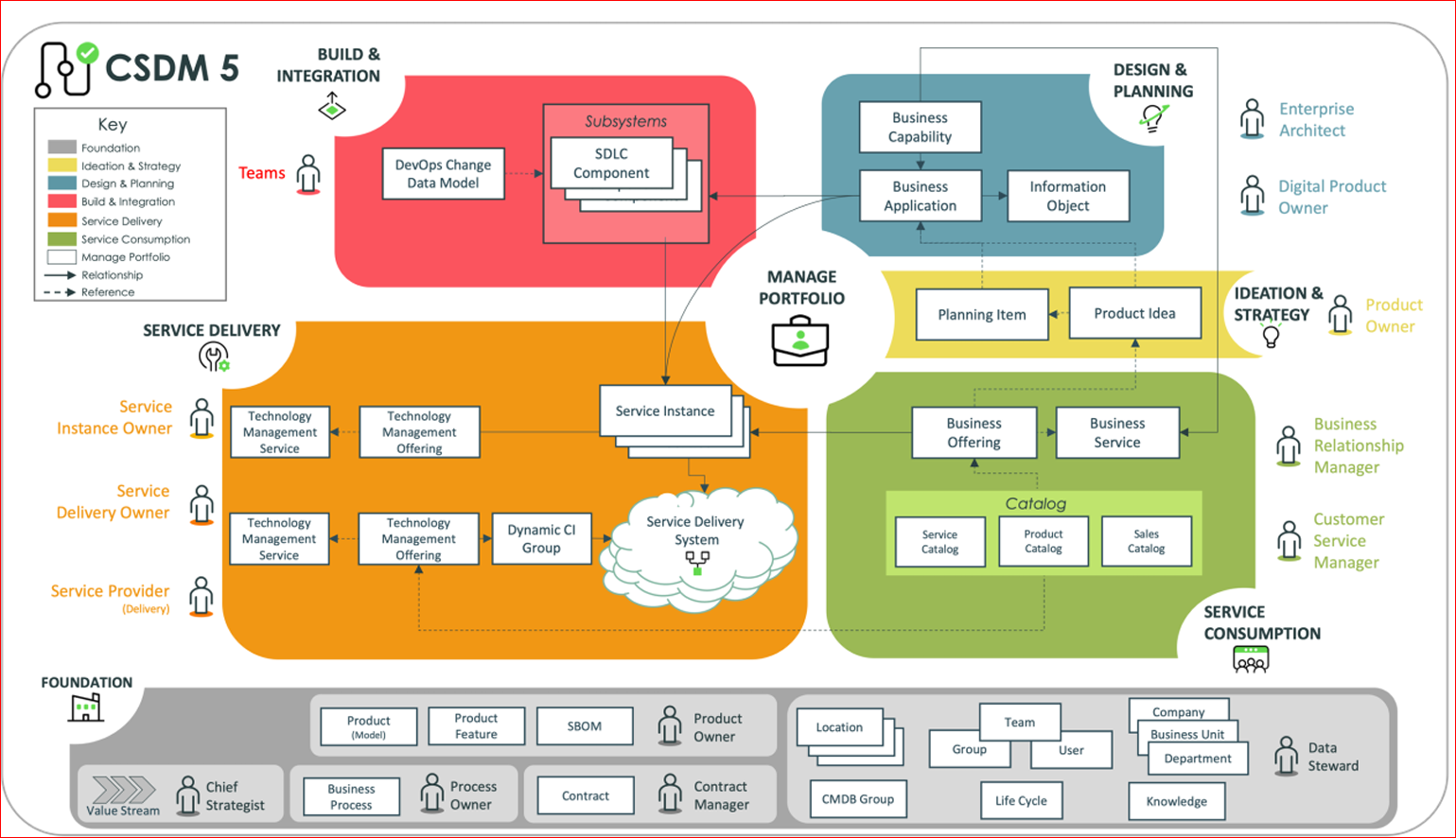
Key Changes in CSDM 5
1. Design & Planning Domain Updates
The Design & Planning domain has undergone significant transformation, evolving from the former “Design” domain. In CSDM5, this domain connects earlier to the Ideation and Strategy domain, making it more aligned with real-world architectural standards.
- Enterprise Architecture Module: The introduction of the Enterprise Architecture module (formerly known as Application Portfolio Management) is a game-changer. It helps organizations manage business applications, track their usage, assess business value, functional fit, and even manage risk. This tool enables a more holistic view of application landscapes.
- Digital Products: A key conceptual shift in CSDM5 is the redefinition of business applications as digital products. This terminology is more in line with modern service models, highlighting the alignment of products with business strategies. The role of Digital Product Owner has also been introduced, emphasizing the importance of product-centric thinking.
2. Ideation & Strategy: A New Domain
A major addition in CSDM5 is the Ideation & Strategy domain. This domain is the precursor to Design & Planning, providing a framework for tracing services back to their very inception. Key concepts within this domain include:
- Product Ideas: These are the seeds of new products, features, or service enhancements. Once a product idea is proposed, it can evolve into demands, stories, or projects.
- Strategic Plans: These define the mission, vision, and goals that shape product and service roadmaps.
- Goals & Targets: This element allows organizations to track and measure the success of their strategic objectives, guiding investment decisions and service delivery.
The Ideation & Strategy domain empowers organizations to better manage the flow of ideas from conception to service consumption, ensuring greater alignment with business needs
3. Service Consumption Updates
Previously called Sell and Consume, the Service Consumption domain is now more accurately named. This domain focuses on the consumption of services by end users, with three catalogs:
- Product Catalog
- Sales Catalog
- Service Catalog
By updating the naming conventions, ServiceNow has made it easier for organizations to distinguish between different types of service offerings and their consumption methods.
4. Foundational Data: Value Streams & Business Processes
CSDM5 introduces more clarity and flexibility around foundational data, specifically with updates to value streams and business processes.
- Value Streams: These represent the sequence of activities that organizations perform to deliver a product or service. CSDM5 introduces 16 predefined value stream categories such as manufacturing, marketing, and order fulfillment.
- Business Processes: A renewed focus on business processes ensures that companies can relate these to other CSDM objects, including value streams. The introduction of business process lifecycle management and review frequencies adds rigor to this aspect, helping organizations meet regulatory requirements like DORA and NIST.
5. Service Delivery Updates
The domain previously known as Managed Technical Services has been renamed to Service Delivery in CSDM5, reflecting a broader focus on the management of technical capabilities that support business and digital services.
- Technology Management Services: The concept of technical services has evolved into technology management services, which better captures the responsibilities for managing not just infrastructure but also the delivery of broader business services.
- Service Instances: In a major shift, application services are now referred to as service instances. This change allows ServiceNow users to represent services more flexibly and adapt to the increasingly complex nature of service delivery, which now includes network components, data services, and even logical instances of facilities.
6. ServiceNow’s Digital System Model & Lifecycle
The Digital System Model in CSDM5 helps organize the various elements of the service landscape into distinct layers, including:
- Process Layer: Ties business processes to the service model.
- Service Layer: Includes service instances and offerings.
- Functional Layer: Contains business applications and application-related CIS (configuration items).
- Infrastructure Layer: Encompasses hardware CIS and product models.
The model makes it easier to visualize where each component fits within the service ecosystem.
7. The Service Lifecycle
One of the most important changes in CSDM5 is the clarification of the service lifecycle. Unlike previous versions, CSDM5 clearly defines each phase of a service’s lifecycle, from ideation and strategy all the way to service consumption. This includes:
- Ideation and Strategy
- Design and Planning (including enterprise architecture)
- Service Delivery
- Service Consumption
By covering the entire lifecycle, organizations can better manage the progression of services from conceptualization to their ultimate consumption within the enterprise.
Final Thoughts: Embracing CSDM5
With these updates, CSDM5 enables ServiceNow customers to better align their service models with current business needs. By breaking down silos, promoting better planning, and offering clearer insights into service delivery and consumption, CSDM5 represents a significant step forward in digital transformation. Although there’s a lot to digest, these changes will help organizations build more flexible, value-driven service models.
As we continue to explore CSDM5, keep an eye on future content that delves deeper into these updates. Make sure to subscribe to ServiceNow’s resources and stay updated on best practices and new features that can help streamline your service management processes.